
Downtime rarely comes from broken equipment. It comes from missing materials, scheduling gaps, and information that arrives too late. Here’s how modern ERP changes that.
June 2026 · 8 min read
Picture your most sophisticated piece of capital equipment — a CNC machining centre, a laser cutter, a moulding press. Now picture it standing completely still at 10 a.m. on a Tuesday. The lights are on, the power is running, depreciation is ticking, and nothing is being made.
That silence is costing you more than almost any breakdown ever could. Yet most manufacturers focus their energy on preventing mechanical failure, while the real driver of unplanned downtime sits in a spreadsheet, an email inbox, or a whiteboard scheduling conflict nobody has resolved yet.
An idle machine represents sunk capital cost with zero productive output — every hour lost is unrecoverable.
23% Average unplanned downtime in discrete manufacturing
$26k Estimated hourly cost of downtime for a mid-size manufacturer
82% Of downtime events caused by non-equipment factors
“When we audit idle time, we almost never find a mechanical root cause. We find a missing purchase order, a scheduling overlap, or a supervisor waiting for an answer that was already in the system.”
Before you can fix idle time, you need to know what’s actually causing it. A thorough analysis of production stoppages across manufacturing sectors consistently points to three operational categories, not equipment failures.
📦
Missing or late materials
Raw stock, sub-components, or consumables not at the workstation when the job is scheduled to start. Often a supply chain visibility problem.
📅
Scheduling conflicts
Two jobs competing for the same resource simultaneously, or a job released to the floor without its prerequisite operations being complete.
🔄
Poor information flow
Engineering changes that don’t reach the floor in time, quality holds nobody acted on, or tooling requirements nobody communicated to set-up.
🔧
Maintenance coordination gaps
Planned maintenance not aligned with production schedules, creating unexpected clashes between PM windows and urgent customer jobs.

Workers waiting for materials or information represent double waste: the machine is idle and labour is also unproductive
The insidious part is that each of these root causes is fundamentally an information problem. The material exists in a warehouse — but nobody connected that warehouse position to the production schedule. The scheduling conflict was visible in the data — but the planner’s spreadsheet and the shop-floor whiteboard were two separate universes.
CloudSuite Industrial (CSI), Infor’s purpose-built ERP for discrete and process manufacturers, was designed around exactly this challenge. Rather than treating production planning, materials management, and shop-floor execution as separate modules bolted together, CSI runs them as a single connected data model — so the moment something changes anywhere in the operation, everything that depends on it is updated instantly.
CloudSuite Industrial’s unified data model connects procurement, scheduling, and shop-floor execution in real time.
1 Material Requirements Planning that actually talks to scheduling
CSI’s MRP engine calculates material requirements directly from the production schedule, not from a static forecast. When a job is released, the system checks inventory availability, on-order quantities, and lead times simultaneously — and flags shortages before the job hits the floor, not the morning it’s due to start. Planners see a live material coverage view linked directly to the dispatch list.
2 Finite capacity scheduling with real-time constraint visibility
Unlike infinite-capacity MRP, CSI’s Advanced Planning and Scheduling (APS) models your actual machine capacity, tooling constraints, and labour availability. Scheduling conflicts are surfaced graphically on a Gantt board before they become floor-level standstills. Dispatchers can drag and drop to resolve clashes, and the system instantly recalculates downstream impacts across all affected jobs.
3 Single-source-of-truth for engineering and operations
Engineering change orders in CSI flow directly to the Bill of Materials, routings, and active work orders simultaneously. There is no lag between the engineering record and the shop-floor packet. When a drawing revision is approved, every open job that references that part is automatically flagged — eliminating the “nobody told us” idle event that plagues manufacturers running disconnected CAD-to-shop systems.
4 Shop-floor data collection and real-time OEE dashboards
CSI captures machine status, job progress, and downtime reason codes in real time from terminal, tablet, or barcode scan at the point of work. Supervisors see OEE (Overall Equipment Effectiveness) live on floor-level dashboards. Downtime events are coded against reason categories (waiting for material, waiting for tooling, waiting for instruction) — creating the data set needed to drive continuous improvement rather than guessing.
5 Proactive maintenance scheduling integrated with production
CSI’s maintenance management module plans preventive maintenance windows against the production schedule — not against a calendar in isolation. The system proposes PM windows during planned downtime, low-demand periods, or between shifts. The result is maintenance that actually happens on schedule, rather than being deferred until a machine forces an unplanned stop.
What changes when information flows in real time
The reluctance to invest in a modern ERP often comes down to visible cost versus invisible cost. The ERP licence and implementation has a price tag. The idle machine has a cost that never appears on a single line of the P&L — it hides in late delivery penalties, expediting freight charges, overtime to recover lost output, and the customer who quietly moves their next order to a competitor.
Consider this: A CNC machining centre depreciating at $120,000 per year runs approximately 4,000 hours annually at full capacity. That’s $30 per hour in depreciation alone — before you count labour standing idle, overhead absorption losses, or the opportunity cost of the job that didn’t ship. Two hours of idle time per day across five machines is over $300,000 per year in unrecovered fixed cost. An ERP implementation that eliminates even half of that pays for itself in the first year.
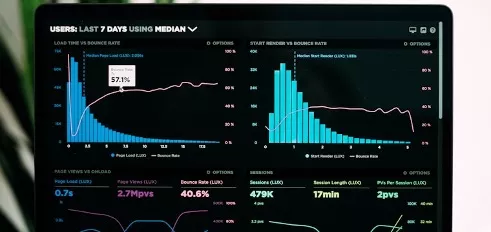
Modern manufacturers use live scheduling dashboards to catch conflicts and material gaps before they cause idle time on the floor.
The manufacturers seeing the strongest ROI from CSI implementations are not the ones with the highest equipment failure rates. They are the ones that recognised their operational data was fragmented — living in spreadsheets, email threads, and whiteboards that could never keep pace with a dynamic production environment. CSI gives that data a single home, and makes it visible to every decision-maker who needs it, at the moment they need it.
The most expensive machine in your factory isn’t broken. It’s waiting. Waiting for a part that’s in your warehouse but wasn’t allocated. Waiting for a job that was scheduled on a resource already committed elsewhere. Waiting for an instruction that exists in the system but never made it to the floor.
Solving that requires more than better maintenance schedules or faster repairs. It requires a connected operational platform where materials, schedules, engineering data, and shop-floor reality exist in the same system, updated in real time, and visible to the people who make decisions.
That is precisely what CloudSuite Industrial was built to deliver. The question isn’t whether your operation can afford to implement it. It’s whether it can afford to keep running without it.